heating
Underfloor heating
Wet underfloor heating costs £70 to £120 per square metre installed in a new screed, and £100 to £160 for a low profile retrofit over an existing floor. It runs at a low flow temperature, which is what makes it the natural partner for a heat pump.
What this covers
What it costs. Wet underfloor heating costs £70 to £120 per square metre installed in a new screed, and £100 to £160 per square metre for a low profile retrofit. Full cost breakdown.
What the job covers
- Wet underfloor heating in extensions and new builds
- Retrofit low profile systems over existing floors
- Manifolds, actuators and zone controls
- Screed and floor build-up coordination
- Fault finding on existing loops
What is involved
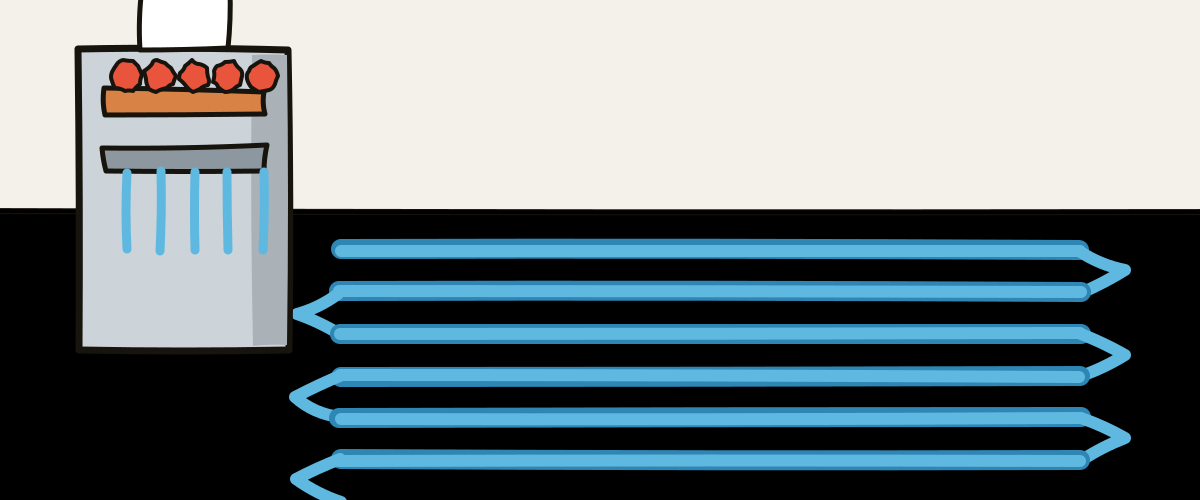
A wet system is a continuous loop of plastic pipe clipped to insulation, covered in screed, and fed from a manifold that blends boiler flow down to around 35 to 45 degrees. The floor becomes the emitter, and because its surface area is the whole room, it delivers the same heat at a much lower water temperature than a radiator. That is the efficiency argument, and it is also why it suits a heat pump, which loses output badly as flow temperature rises.
The build-up decides whether it is practical. A traditional screeded system adds 65 to 100mm to the floor, which is fine in an extension designed for it and impossible in an existing room with doors and stairs already set. Low profile retrofit boards add 15 to 25mm and cost more per metre, and they respond faster because there is less mass to heat.
Floor finish matters more than people expect. Tile and stone conduct well and suit it. Engineered timber works within the manufacturer's temperature limit. Thick carpet and heavy underlay insulate the floor from the room and can halve the output, so the tog value has to be checked at the design stage, not after the screed has gone down.
Commissioning is where systems fail. Loops have to be pressure tested before screeding, the screed has to be cured before heat is applied, and the system then has to be brought up in stages over several days. Heating a green screed quickly cracks it.

Wet underfloor heating in extensions and new builds, one of the jobs a underfloor heating specialist is hired for.
Choosing someone for the job
Ask for the floor build-up in millimetres before agreeing anything, and check it against your door and threshold heights. Ask what flow temperature the system is designed for and whether it will still work if you later fit a heat pump. Ask to see the pressure test on the loops before the screed goes down, and get a photograph of the pipe layout for the file.
Common questions
Is underfloor heating cheaper to run than radiators?
It can be, because it runs at a lower flow temperature and keeps a condensing boiler or heat pump in its efficient range. Poorly insulated floors and thick carpet cancel that advantage out.
Can underfloor heating be retrofitted?
Yes, using low profile boards that add 15 to 25mm rather than a full screed. It costs more per square metre and responds faster, which suits rooms used intermittently.