Guide
Radiator cold at the bottom? Causes and the fix
Warm at the top and cold at the bottom means sludge: iron oxide that has settled where the water moves slowest. Bleeding will not shift it. One radiator can be flushed off the wall; several mean the system needs cleaning.
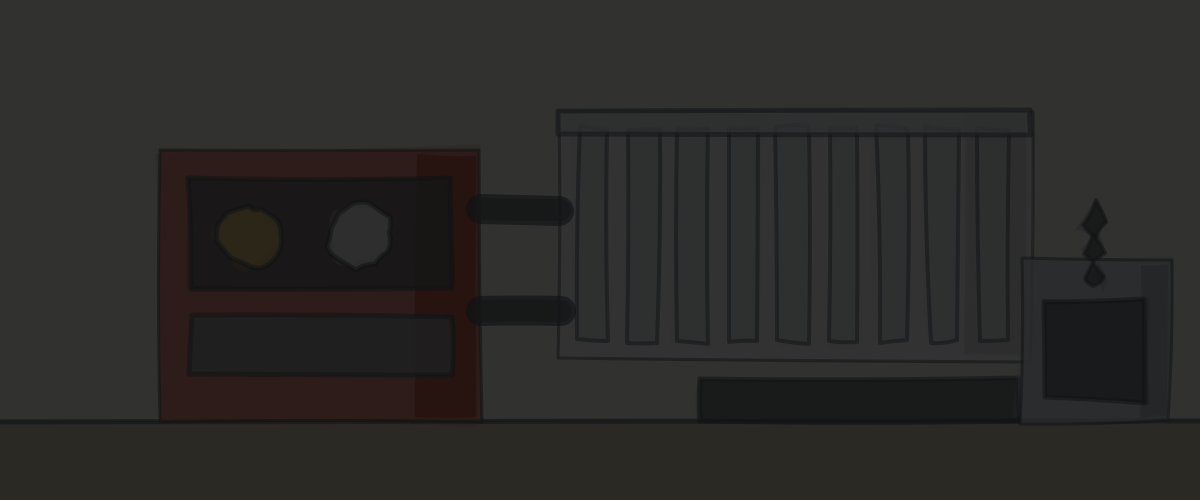
Read where the cold is
Run the heating for half an hour and run a hand over each radiator, top to bottom and end to end. The pattern is a diagnosis in itself.
| What you feel | Likely cause | First step |
|---|---|---|
| Cold top, warm bottom | Air | Bleed it |
| Warm top, cold bottom | Sludge | Flush the radiator or clean the system |
| Cold patch in the middle | Sludge across the waterways | As above |
| Whole radiator cold | Stuck valve or no flow | Check the valve pin and lockshield |
| Near ones hot, far ones cool | System not balanced | Balance the lockshield valves |
A cold bottom edge is the most misread of these. People bleed a radiator, get a squirt of water and no air, and assume the problem is somewhere else.
What the sludge is
Steel radiators and iron fittings corrode slowly from the inside, and the product is black iron oxide, magnetite. It is heavy, so it drops out of the water and settles along the bottom of each panel where flow is weakest. Over years it can fill a third of a radiator.
Other signs usually come with it. Water from a bleed valve comes out grey or black. The pump gets noisier. The boiler may start to bang or rumble as deposits restrict its heat exchanger, and a boiler that locks out on overheat in the first cold week can be sludge rather than a failed part. Corrosion inhibitor in the water slows the process, which is why it should be topped up whenever a system is drained.
Checks to make first
Before anyone takes a radiator down, rule out the simple explanations. Unscrew the thermostatic head from the valve and press the small pin underneath: it should move in and spring back. A pin stuck down holds the valve shut, and a few gentle presses or a tap often frees it. Then check the lockshield valve at the other end, under its plastic cap, has not been closed during decorating.
If both valves are open and the radiator is still cold along the bottom while others are fine, it is sludge in that radiator.
Flushing one radiator
A single affected radiator can be taken off the wall and flushed through outside. It is a job some confident householders do, and a short one for a plumber.
- Turn the heating off and let it cool.
- Close the thermostatic valve, then close the lockshield, counting the turns so it can be reopened to the same setting.
- Undo the unions, drain the radiator into a tray, and lift it off its brackets.
- Outside, run a hose through it until the water comes out clear.
- Rehang it, reopen the valves to their old settings, bleed it, and top up the boiler pressure.
Removing and refitting a radiator typically costs £50 to £90 each from a plumber. If several radiators have the same cold bottom, though, flushing them one at a time treats the symptom and leaves the sludge in the pipes and the boiler.
Why it keeps coming back
Sludge forms when oxygen gets into the water and reacts with the steel. A sealed system with a correct dose of inhibitor produces very little. One that keeps forming sludge is usually getting fresh oxygen from somewhere: a small leak being topped up with new water every few weeks, an open vented system where the pump pushes water up and out of the vent pipe into the loft tank, or an inhibitor dose that was never replaced after the last drain-down. Cleaning the system without finding which of these applies is likely to need repeating within a few years.
When the whole system needs cleaning
Two or more radiators with cold bottoms, black water, and a noisy pump point to a system clean. A power flush, where a pump drives water through the circuit at speed while a filter collects what comes out, typically costs £350 to £700 for a house depending on radiator count. On lightly fouled systems a chemical flush, which circulates a cleaner and then drains it, is cheaper and may be enough.
The part that keeps the system clean afterwards is the magnetic filter, a canister on the return pipe that catches iron oxide before it reaches the boiler. Fitted, it is usually £150 to £300.
What to ask the plumber
Ask whether they will test the water before quoting, because a sample shows how much sludge there really is. Ask whether a chemical flush would do, whether a magnetic filter and a fresh inhibitor dose are included in the price, and whether they will show you the water before and after. A power flush recommended after a water test is one you can check for yourself.
Common questions
Will a new radiator fix a cold bottom?
Only for that radiator, and only until the sludge already in the pipes settles into it. Replacing radiators without cleaning the system moves the problem rather than ending it.
Can I just pour sludge remover into the system?
On a sealed system the cleaner has to go in through a radiator or a filter, and then be drained and replaced with inhibitor after the stated time. Left in, some cleaners keep working on the metal. It is a reasonable first step on a lightly fouled system if it is done by the instructions.
Is sludge damaging my boiler?
It can. The same deposits that fill radiators collect in the boiler's heat exchanger and pump, where they cause overheating, noise and lockouts. A magnetic filter is the cheapest protection against it.