Guide
What size radiator do I need? BTU and watts
A radiator is chosen by heat output, not by its dimensions. Work out what the room needs in watts, convert to BTU if the listing uses them (1 watt is 3.41 BTU an hour), and check the output at your system's temperature.
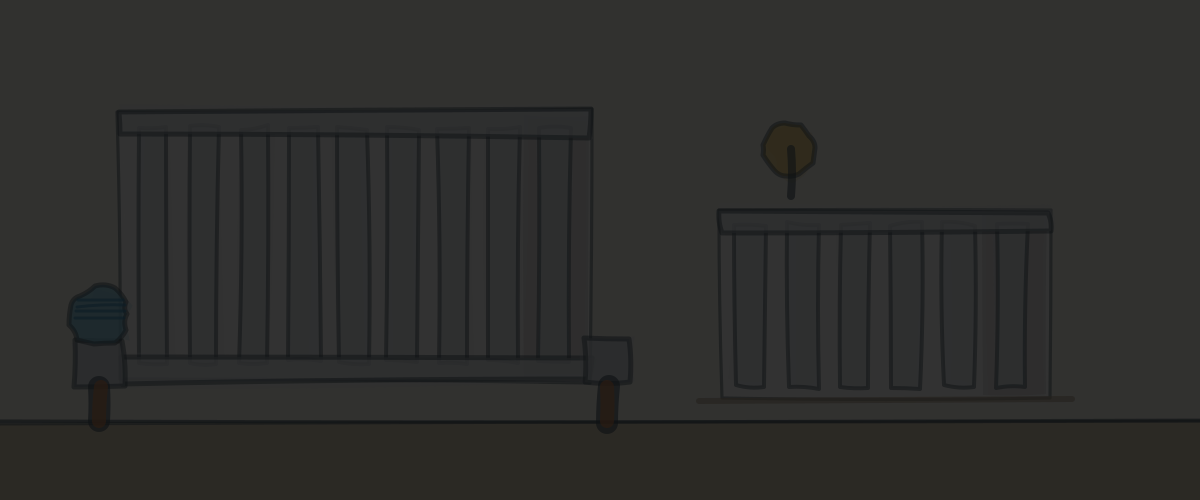
Output, not size
Two radiators the same height and width can differ in heat output by a factor of two or more. What counts is how many watts the radiator delivers, and that depends on its construction as well as its size. Panel radiators are described by type:
- Type 11: one panel, one set of fins behind it.
- Type 21: two panels, one set of fins between them.
- Type 22: two panels, two sets of fins. The most output for the wall space, and the deepest.
Outputs are listed in watts, BTU per hour, or both. One watt is 3.412 BTU per hour, so a 1,000 watt radiator is about 3,400 BTU.
What a BTU calculator actually does
Most online calculators multiply the room's volume by a factor, then adjust for things like external walls, windows, and whether the room is above an unheated space. They give a reasonable starting figure for a like for like swap.
The proper method is a room by room heat loss calculation. It works out how much heat leaves each room through its walls, floor, ceiling, windows and air leakage at the coldest expected outdoor temperature, and the radiator is chosen to replace that loss. The European standard for it is BS EN 12831. Heating engineers designing a new system or a heat pump installation should be working from one, and should be able to show you the figure for each room.
The detail most calculators skip
Manufacturers rate radiators at a standard test condition, known as Delta T 50. Delta T is the difference between the average temperature of the water in the radiator and the room. A traditional gas boiler running at 75 degrees out and 65 back, with the room at 20, gives Delta T 50, and the radiator delivers its catalogue output.
Run the water cooler and the output falls faster than you might expect. The usual approximation multiplies the catalogue figure by a correction factor:
| Delta T | Typical water, flow and return | Share of rated output |
|---|---|---|
| 50 | 75 and 65 | 100% |
| 40 | 65 and 55 | about 75% |
| 30 | 55 and 45 | about 51% |
| 25 | 50 and 40 | about 41% |
These assume a room at 20 degrees and a typical radiator exponent of 1.3; each manufacturer publishes its own figures. The point is that a modern condensing boiler running at a lower temperature, or a heat pump, needs larger radiators than the old catalogue figure suggests.
A worked example
Say a heat loss calculation gives a living room 1,500 watts, about 5,100 BTU an hour.
- On a boiler at Delta T 50, a radiator rated at 1,500 watts or more does the job.
- Run at Delta T 30, the same room needs about 1,500 divided by 0.51, so a radiator rated at roughly 2,950 watts. That might be one large type 22 or two smaller radiators.
- For a heat pump running cooler still, the figure climbs again, which is why heat pump quotes usually include some radiator upsizing.
Rounding up a little is sensible. Rounding up a lot is not: an oversized radiator costs more, and on a boiler it can make the room overshoot before the thermostat catches up.
Rooms that need more than the calculator says
Some rooms lose heat faster than their size suggests. A room with a large bay window, two or three external walls, solid walls rather than cavity, or an unheated garage or open floor void underneath will need more output than an average room of the same volume. So will a loft room under a sloping ceiling. Bathrooms are kept warmer than bedrooms, and a heated towel rail alone often puts out only a few hundred watts, so check its output before removing an existing radiator.
One radiator or two
A long room with windows at both ends often heats more evenly with two smaller radiators than one large one, each under a window where the cold air falls. The combined output is what has to match the room. Two radiators also need two sets of valves and more pipework, which adds to the cost of fitting.
Swapping one for a bigger one
When replacing a radiator, measure the distance between the centres of the two pipe connections, not just the width of the old radiator. If the new one has the same pipe centres, the swap is short. If not, the pipework has to be moved at the floor. A like for like swap typically costs £150 to £350 fitted, and adding a new radiator to an existing circuit is usually £400 to £900, depending on how far the pipework has to run and whether the floor is timber or solid.
Common questions
How many BTU do I need per square metre?
There is no single figure that holds. A room's heat loss depends on its height, insulation, windows, external walls and what is above and below it. A calculator gives a starting point; a heat loss calculation gives the answer.
Is a double radiator better than a single?
A double panel puts out much more heat for the same wall space, at the cost of depth. Where wall space is short, a type 22 is usually the answer. Where depth is limited, a longer type 11 can match it.
Do designer radiators give out less heat?
Many tall and flat panel designs deliver less per metre of wall than a conventional convector. Compare the listed output in watts at Delta T 50, not the dimensions.
Do I need bigger radiators for a heat pump?
Usually some of them. A heat pump works most efficiently with water around 35 to 45 degrees, where a radiator sized for a boiler delivers well under half its rated output. The heat loss survey shows which rooms need larger ones.